
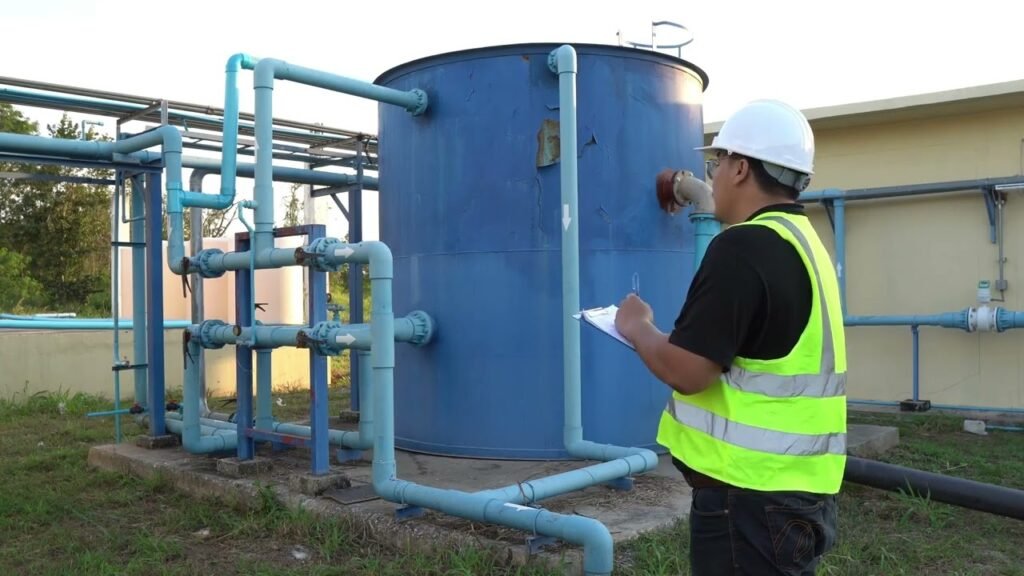
When Water Looks Fine but Still Has a Problem
Not every water-quality issue announces itself immediately. Sometimes the water coming from your tap looks perfectly clear in the glass, yet leaves orange stains around the sink, metallic-tasting water in your coffee, or rusty marks on laundry. If that sounds familiar, iron could be part of the story.
Iron in water isn’t unusual, particularly for homes supplied by private wells. The good news is that it can often be treated effectively once you understand what type of iron you’re dealing with. The tricky part? Choosing a system without testing the water first can lead to wasted money and disappointing results.
Why Iron Ends Up in Well Water
Iron is a naturally occurring mineral found in soil and rock. As groundwater moves through underground formations, it can pick up dissolved iron along the way.
The amount can vary considerably from one property to another. One well might have barely noticeable levels, while another can produce water that stains fixtures and laundry within days.
Iron may appear in different forms. Ferrous iron, sometimes called clear-water iron, can remain dissolved until the water comes into contact with oxygen. Ferric iron is already oxidized and may appear as visible reddish or brown particles.
There can also be iron-related bacteria, which create their own treatment challenges. That’s why identifying the actual problem matters.
Testing Comes Before Treatment
Before selecting equipment, homeowners should have their water tested. A good analysis can reveal iron concentration and other factors that influence treatment, including pH, hardness, manganese, and potentially other water-quality characteristics.
This information helps determine whether basic iron filtration is enough or whether a more specialized treatment setup is necessary.
It also prevents a common mistake: choosing equipment based on symptoms alone. Orange stains suggest iron, but they don’t tell you exactly how much iron is present or what form it takes.
In other words, the stains are a clue, not a diagnosis.
How Oxidation Helps Remove Iron
One common approach to iron treatment involves converting dissolved iron into particles that can be physically filtered from the water.
This process is called oxidation. The dissolved iron reacts with oxygen or another oxidizing agent and becomes a solid form that filtration media can capture.
Different systems accomplish this in different ways. Some use chemical oxidants, while others introduce air into the water before it reaches the filter.
The choice depends on the water chemistry and the amount and type of iron present. There’s no universal setting that works perfectly for every well.
Understanding Oxidizing Media
Once iron has been converted into particles, the filtration stage needs something capable of trapping those particles. This is where oxidizing media can play an important role.
These specialized filtration materials are designed to encourage oxidation and/or capture oxidized iron as water passes through the treatment tank. Their performance depends on the specific media, water chemistry, flow rate, and maintenance routine.
That last part is easy to overlook. A treatment system isn’t just a tank sitting in the basement or garage. It needs to be properly sized, configured, and maintained to keep doing its job.
Air Injection Is One Treatment Option
For certain well-water conditions, air-injection technology can provide a practical way to introduce oxygen into the treatment process.
The basic idea is fairly straightforward: air is introduced into the water, allowing dissolved iron to oxidize. The resulting particles can then be captured by filtration media.
This approach can be useful when the water chemistry is appropriate, and it may reduce the need for continuously feeding certain chemical oxidants. Still, air injection isn’t automatically the right choice for every household.
Water testing should determine whether the technology is suitable.
Don’t Forget About Manganese
Iron isn’t always the only mineral causing trouble. Manganese can occur alongside iron in groundwater and may create dark staining or other unpleasant effects.
If a water test finds both minerals, the treatment system needs to account for them together. A solution that performs well against iron may not necessarily be equally effective for manganese under every set of conditions.
This is another reason professional testing is so valuable. Treating one issue while ignoring another can leave homeowners wondering why the system isn’t delivering the expected results.
pH Can Change the Equation
Water chemistry is interconnected. pH, for example, can affect how effectively certain treatment methods remove iron and manganese.
If the pH isn’t appropriate for a particular treatment process, performance may suffer. In some situations, adjusting the water chemistry may be necessary before filtration can work properly.
It’s a bit like trying to bake bread with the wrong oven temperature. You can have great ingredients, but the conditions still matter.
A complete water analysis helps identify these factors before equipment is selected.
Maintenance Shouldn’t Be an Afterthought
Iron filtration systems can collect a considerable amount of material over time. Depending on the design, the system may need periodic backwashing to clean the filtration media and remove trapped contaminants.
Other components may require inspection or replacement.
Skipping maintenance can gradually reduce water flow and treatment performance. Homeowners should understand the system’s maintenance schedule before installation, including what they can handle themselves and what requires professional service.
A little routine care is much easier than dealing with a system that has stopped working properly.
Choose Equipment Based on Your Water
There are plenty of iron filters available, but shopping by product name alone isn’t the smartest approach. The right equipment depends on iron concentration, the form of iron present, pH, hardness, manganese, water usage, and other factors.
A system that works beautifully for one well may be poorly suited to another.
That’s why the most useful first step isn’t browsing equipment catalogs. It’s getting the water tested and understanding the results.
Cleaner Water Starts With the Right Strategy
Iron in well water can be frustrating, especially when the stains keep returning and every load of laundry seems to reveal another rusty mark. But it doesn’t have to be a permanent problem.
With proper testing, the right oxidation or filtration method, and regular maintenance, many iron-related water issues can be managed effectively.
The key is resisting the temptation to guess. Understand the water first, then choose the technology that fits it. A well-designed treatment system should quietly do its job in the background, leaving you with one less household problem to think about — which, honestly, is exactly what good water treatment should do.