
Understanding IR Receiver and Amplifier Board: How They Work Together in Electronics
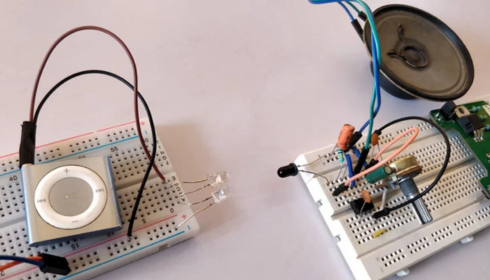
In today’s world of smart electronics, even the smallest components play a surprisingly big role. From TV remotes to home automation systems, there’s a quiet network of sensors and circuits working behind the scenes. Two such unsung heroes are the ir receiver—components that may seem technical at first glance, but are actually quite fascinating once you understand how they function together.
What Is an IR Receiver?
An infrared (IR) receiver is a small electronic device that detects infrared signals—basically invisible light waves emitted by objects like remote controls. When you press a button on your TV remote, it sends coded infrared signals. The IR receiver picks up these signals and converts them into electrical pulses that a microcontroller or processor can understand.
What makes IR receivers so useful is their simplicity and reliability. They’re widely used in consumer electronics because they don’t require complex wiring or high power. You’ll find them in televisions, air conditioners, set-top boxes, and even DIY electronics projects. Honestly, it’s kind of amazing how something so tiny can interpret signals from across a room without missing a beat.
The Role of an Amplifier Board
Now, detecting a signal is one thing—but sometimes that signal is too weak to be useful. That’s where an amplifier board comes into play. As the name suggests, it boosts the strength of an electrical signal, making it easier for other components in the circuit to process it.
In practical terms, an amplifier board ensures that signals don’t get lost due to noise, interference, or long-distance transmission. For instance, if an IR receiver picks up a weak signal, the amplifier can strengthen it before passing it on to a microcontroller. Without amplification, the system might misinterpret commands—or worse, not respond at all.
How They Work Together
When paired together, an IR receiver and an amplifier board form a reliable communication chain. The IR receiver captures the incoming infrared signal and converts it into an electrical form. However, depending on environmental conditions—like distance, obstacles, or ambient light—the signal might not be strong enough.
Here’s where the amplifier board steps in. It enhances the signal’s strength, ensuring that it reaches the processing unit clearly and accurately. This combination is particularly useful in larger setups, such as home automation systems or industrial applications, where signal clarity is crucial.
It’s a bit like having someone whisper a message to you in a noisy room. You might catch bits and pieces, but not everything. Now imagine using a microphone and speaker system—that’s essentially what amplification does for electronic signals.
Common Applications
You might not realize it, but this duo is everywhere. In home theaters, IR receivers allow remote controls to communicate with devices, while amplifier boards ensure consistent signal processing. In robotics, they’re used for obstacle detection and control systems. Even in security systems, infrared sensors and amplifiers help detect motion or unauthorized access.
For hobbyists and DIY enthusiasts, these components are a favorite. Building a remote-controlled car or a smart lighting system often involves combining IR receivers with amplification circuits. It’s a great way to learn electronics hands-on, and honestly, it’s pretty satisfying when everything works smoothly.
Choosing the Right Components
If you’re planning to use these in a project, it’s important to choose compatible and high-quality parts. Look for IR receivers with good sensitivity and noise filtering capabilities. For amplifier boards, consider factors like gain, power consumption, and size.
Also, don’t overlook the importance of proper circuit design. Even the best components won’t perform well if they’re not integrated correctly. A little planning goes a long way here.
Final Thoughts
At first glance, components like IR receivers and amplifier boards might seem like minor details in a larger system. But once you dig a little deeper, you realize how essential they are. They ensure smooth communication, accurate signal processing, and reliable performance across countless devices.
And maybe that’s the beauty of electronics—small pieces coming together to create something much bigger.
More resources in this category

Cognitive Intelligence SEO for Healthcare: Balancing Sensitivity, Trust, and Visibility
Healthcare SEO is a different animal. The stakes are different — someone searching for medical information is often scared, confused,…
Read the guide
Securing Hybrid Cloud Environments Across Multiple Providers
Hybrid cloud environments that span on-premises infrastructure and multiple cloud providers have become the standard architecture for most large organisations.…
Read the guide
AI Video Generator for Instagram: Boost Your Visual Strategy
In the fast-paced world of social media, Instagram remains a powerhouse for visual storytelling, with video content driving unprecedented engagement.…
Read the guide