
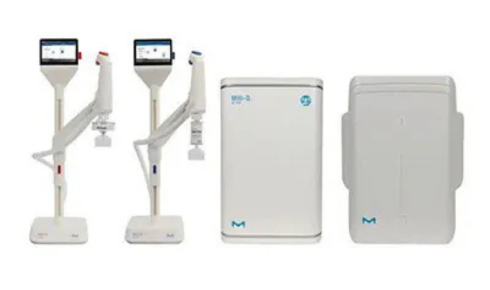
Why Clean Water Isn’t Just for Drinking: The Unsung Hero Behind Precision Industries
Let’s talk water — but not the kind you pour into a glass or jump into on a hot day. We’re diving into a far less glamorous, yet deeply fascinating world: the water used behind the scenes in industries, labs, and manufacturing. It’s the type of water you don’t often think about, but without it, your phone wouldn’t exist, your medicine might not be safe, and your car’s engine could wear out faster than it should.
Welcome to the unseen world of ultra-clean water — the foundation of industries that demand precision, purity, and perfection.
More Than Just H₂O
If you’ve ever thought, “Water is water,” you’re not alone — but you’d also be wrong. Tap water, filtered water, spring water, even distilled water… they all play different roles in our daily lives. But when it comes to industrial or scientific applications, the game changes. Significantly.
Water used in high-stakes industries isn’t just cleaned — it’s transformed. This is where industrial water purification systems come into play. They go beyond your Brita pitcher or even municipal filtration. We’re talking about multi-stage processes that strip water down to its very molecular soul — removing ions, bacteria, organic matter, and even microscopic particles that could interfere with machinery or experiments.
In sectors like semiconductors, biotech, pharmaceuticals, and food production, even a speck of impurity can cause a catastrophic domino effect. One tiny contaminant can ruin an entire batch of sensitive components or compromise a clinical formula.
Why Precision Manufacturing Is Obsessed with Water
If you’ve ever held a smartphone, you’ve held the result of hundreds of hours of ultra-precise engineering. Microscopic parts, laser-cut chips, and molecular-level components are incredibly sensitive. Even the smallest impurity in the production environment can destroy functionality, or worse, shorten product life without warning.
That’s why precision manufacturing water has its own category — its own science, even. In this realm, water is both a tool and a threat. It’s used to cool, clean, coat, and transport materials. But if it carries minerals, chemicals, or biological material? It stops being helpful and becomes hazardous.
Factories creating medical devices, aerospace components, or microchips don’t just need water. They need it to be consistent. Predictable. Ridiculously clean — every single drop. These operations often rely on reverse osmosis, deionization, and ultraviolet disinfection just to ensure the water meets spec.
And it’s not about luxury or overkill. It’s about function. It’s about making things that simply wouldn’t work without water that’s more controlled than the air we breathe.
In the Lab, It’s a Whole Other Ball Game
Now imagine you’re in a laboratory running experiments that measure the effectiveness of a new cancer drug. Or you’re analyzing tiny DNA strands to solve a decades-old criminal case. Think about what would happen if your results were skewed — not by user error or faulty equipment, but by contaminated water used in your solutions.
That’s why lab grade water systems exist. Labs don’t rely on standard municipal supplies. Their water is often purified through a meticulous, multi-step process: pre-filtration, carbon filtration, reverse osmosis, polishing with ion exchange resins, and then — just to be sure — UV sterilization and sub-micron filtration.
Lab grade water isn’t just about cleanliness. It’s about consistency and reliability. That’s the whole point. Whether it’s for analytical chemistry, molecular biology, or clinical diagnostics, water quality can directly affect test accuracy and repeatability. In other words, the truth of your data may very well float on the purity of your water.
The Real-World Risks of Cutting Corners
Here’s the thing: cutting corners on water quality isn’t just a cost-saving measure. It’s a dangerous gamble.
In manufacturing, subpar water can lead to faulty components, increased product returns, and expensive recalls. In healthcare, contaminated water could lead to misdiagnosis or the failure of life-saving therapies. In laboratories, it could result in flawed research, wasted funding, and incorrect conclusions. The ripple effects (pun intended) are massive.
And guess what? These risks often go unnoticed by end-users. We rarely realize that a flawed sensor in a smartphone or a recalled batch of medication may have started with something as seemingly simple as impure water.
The Technology Behind the Purity
So, how is this level of cleanliness achieved?
There’s a range of solutions, each tailored to different industry needs:
- Reverse Osmosis (RO): Forces water through a semipermeable membrane to remove up to 99% of dissolved salts, bacteria, and particles.
- Deionization (DI): Removes ions using resins — critical for labs where even trace minerals can ruin results.
- Ultraviolet (UV) Disinfection: Destroys bacteria and viruses without chemicals.
- Ultrafiltration: Captures particles, colloids, and pathogens.
- Carbon Filtration: Removes chlorine, chloramines, and organics that interfere with instruments or cell cultures.
What’s fascinating is how customized these systems can be. A semiconductor fab might prioritize total dissolved solids (TDS) levels, while a biology lab might need pyrogen-free water. A food plant might need to reduce biofilm risks. It’s not one-size-fits-all — it’s one-size-fits-perfect.
Water Quality as a Strategic Advantage
Companies that invest in high-end water systems aren’t just following regulations. They’re buying reliability, efficiency, and customer trust. Clean water means fewer process failures, longer equipment life, and better-quality output. Over time, it pays for itself — not just financially, but reputationally.
In fact, some businesses even market their purification standards as part of their brand — especially in sectors like cosmetics, pharmaceuticals, or high-end electronics. It’s no longer a backend process. It’s a front-end promise.
Final Thoughts: Hidden, But Critical
In a world obsessed with innovation, smart tech, and futuristic solutions, it’s easy to overlook something as “basic” as water. But in reality, water is one of the most advanced materials in any industrial process. It’s invisible in the final product — yet absolutely vital to its creation.
So next time you swipe your screen, take a pill, or marvel at a scientific breakthrough, remember this: somewhere in the shadows, ultra-pure water made it possible.
Clean water may not get the spotlight, but it sure deserves the credit.